Walk into a room that feels finished and calm, and you are usually looking at trim you never consciously notice. Baseboards, door casings, crown molding, and a well-built bookcase are the quiet details that separate a house that feels thrown together from one that feels cared for. This guide explains the main types of trim, molding, and built-ins, how they behave in older Long Island homes, and what to weigh before you hire a carpenter to add them.
What trim and molding actually do
Trim is the woodwork that frames the openings and edges of a room, and it does more than decorate. Where two different surfaces meet, a wall and a floor, a wall and a window, drywall and a door frame, there is always a gap or a rough transition. Trim covers that joint cleanly, protects vulnerable edges from scuffs and moisture, and gives the eye a crisp line to follow. Take the trim off a room and it instantly looks unfinished, even if the walls are freshly painted.
Molding is a specific kind of trim with a shaped profile, milled with curves and steps that catch light and cast small shadows. Crown molding softens the corner where a wall meets the ceiling, chair rail and wainscoting dress the lower wall, and casing wraps doors and windows. None of these are structural, but together they carry a huge share of how a room reads, formal or casual, dated or custom. That is why small trim upgrades often deliver more visible payoff per dollar than almost any other carpentry work.
The main types you will hear about
Baseboard runs along the bottom of the wall and is the piece that takes the most daily abuse from vacuums, shoes, and furniture. Door and window casing frames the openings and sets much of a room's character, from simple flat stock to layered colonial profiles common in older Island homes. Crown molding sits at the top where wall meets ceiling and adds instant formality, though it needs careful cutting because inside corners are rarely a perfect ninety degrees in a house that has settled.
Chair rail and wainscoting dress the lower wall. Chair rail is a single horizontal band, while wainscoting is paneling below it, either raised panel, flat panel, or the popular board and batten look. Picture rail, coffered ceilings, and decorative beams are more specialized touches. You do not need all of these in one room, and mixing too many profiles usually makes a space feel busy rather than rich.
Material matters as much as profile. Painted trim is often finger-jointed pine or MDF, which is smooth, stable, and cost effective. Stain-grade trim uses solid hardwood like oak or poplar to show natural grain. For anything near moisture, a bathroom, a mudroom, or exterior trim exposed to South Shore salt air, moisture-resistant materials or properly primed and sealed wood are worth the small added cost.
Built-ins and why they are worth it
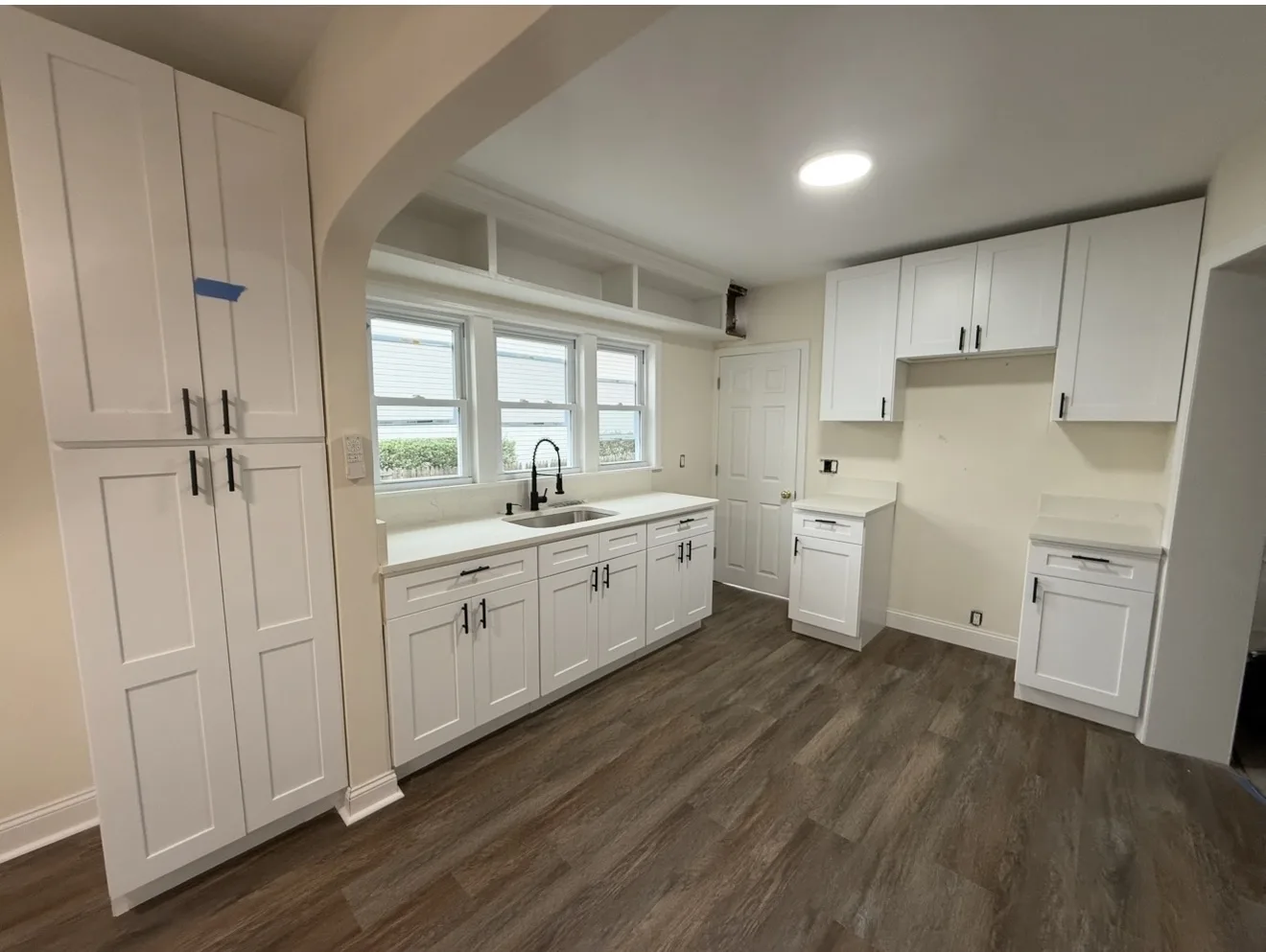
Built-ins are carpentry that becomes part of the house: bookcases flanking a fireplace, a window seat with storage underneath, a mudroom bench with cubbies, a home office wall of shelving, or a banquette in a kitchen nook. Unlike furniture you buy and move, built-ins are scribed and fitted to your exact walls, so they use awkward corners and odd alcoves that store-bought pieces never fill well. In older Long Island homes with quirky layouts, that made-to-fit quality is often the whole point.
Beyond looks, built-ins solve real problems. They add storage without eating floor space, they turn a dead corner into a reading nook, and they give a room a designed, permanent feel that buyers notice. A tidy built-in bench by the back door handles the boots, backpacks, and beach gear that pile up every Long Island summer. Because they are custom, they can match your existing trim and paint so the whole room looks intentional rather than assembled from catalogs.
The trade-off is that built-ins are true custom carpentry, so they take more planning and labor than snapping together a flat-pack shelf. That is exactly why the fit and finish are better, and why it helps to work with a carpenter who will talk through proportions, shelf depths, and how you actually use the space before any wood is cut.
What older Long Island homes demand
Much of the housing stock across Nassau and Suffolk is decades old, and that changes how trim work goes. Walls are rarely dead flat, floors slope a little, and corners have shifted as the house settled over the years. A skilled carpenter does not fight this. Instead, the trim is scribed and coped to follow the real surfaces, so gaps disappear and the finished line looks straight even when the wall behind it is not. This is where experience separates clean work from a job that shows daylight at every joint.
Moisture is the other Long Island factor. Homes near the South Shore and the bays deal with humidity and salt air that can swell, warp, or rot wood trim that was never sealed properly, and basements and bathrooms add their own damp conditions. The fix is choosing the right material and making sure end grain, back sides, and cut edges are primed before installation, not just the visible face. Trim sealed on all sides holds paint longer and resists the seasonal swelling that opens up cracks.
Matching existing profiles is a common request in these homes, especially when you add trim to one room and want it to blend with original 1950s or older millwork elsewhere. Some classic profiles are still stocked, and others have to be built up by layering standard pieces to recreate the old look. A carpenter who has worked on Island homes for years knows which approach fits your house.
Planning the project and budgeting honestly
Start by deciding what the trim should accomplish. A single room refresh, new baseboards and casing to erase a dated look, is a very different scope from crown molding through the whole first floor or a wall of custom built-ins. Bring photos of looks you like, and be honest about how the room is used, because a formal dining room and a busy family room call for different profiles and durability. Deciding scope up front keeps the estimate accurate and avoids mid-project surprises.
On budget, trim and built-in pricing swings widely with material, profile complexity, wall condition, and how much of the house is involved. Simple painted baseboard in one room sits at the low end, while stain-grade hardwood, intricate crown, or a floor-to-ceiling built-in with doors and custom finish costs considerably more. Any figure you read online is only a rough range that shifts once someone sees your actual walls. The reliable way to get real numbers for your home is a free on-site estimate, so call Jireh Solutions at (631) 875-9031 and we will measure, talk through options, and give you honest pricing.
Finally, weigh the difference careful installation makes. Trim is unforgiving work: crisp miters, tight copes, clean caulk lines, and filled nail holes are what make the finished room look custom. With twenty years working on Suffolk and Nassau homes, one clean crew handling the whole job in sequence, cutting, fitting, and finishing, is what turns raw lumber into the quiet detail that makes your rooms feel done.
Frequently asked questions
Trim is the general term for all the woodwork that frames a room, including baseboards, casing, and crown. Molding is a type of trim with a shaped, milled profile that adds curves and shadow lines. All molding is trim, but not all trim has a decorative profile. In everyday conversation people use the words loosely and often mean the same thing.
For awkward spaces and permanent storage, usually yes. Built-ins are fitted to your exact walls, so they use corners and alcoves that store-bought pieces cannot, and they match your existing trim for a designed look. Furniture is cheaper and movable, but it rarely fits an odd nook as cleanly or adds the same permanent value.
Very often, yes. Some classic profiles are still stocked, and when an old profile is discontinued a carpenter can build up a close match by layering standard pieces. In older Long Island homes this is a common request, and matching existing millwork is exactly the kind of detail worth reviewing in person during a free estimate.
Choose the right material and seal it completely. Near the South Shore, salt air and humidity attack wood that was primed only on the visible face. Moisture-resistant materials, or wood primed and sealed on every side including cut ends, hold up far better. Keeping caulk lines intact and repainting before the finish fails also protects the wood for years.