If you own a home in Suffolk or Nassau, your basement is one of the most valuable square-footage opportunities you have, and also the most vulnerable to water. Between a high water table, humid summers, and the coastal moisture that rolls in off the South Shore, the wrong flooring can buckle, trap mold, or peel apart within a couple of seasons. This guide walks you through the flooring that actually holds up in a Long Island basement or damp room, and how to choose the right one for your space.
Why Long Island basements are a special case
Long Island sits on a sandy aquifer, which means the water table is often closer to the surface than homeowners expect, especially in low-lying parts of the South Shore and in towns near the bays. Add decades-old housing stock, where original foundations were poured long before modern vapor barriers were standard, and you get concrete slabs that quietly release moisture upward every single day. That process, called vapor drive, is invisible until it lifts your new floor.
The seasonal swings make it worse. Our humid July and August air condenses on cool basement slabs, and the freeze-thaw cycles of a Long Island winter can open hairline cracks that let groundwater seep in. A floor that would be perfect in a bedroom upstairs can fail badly below grade, so basement flooring has to be chosen for the environment, not just the look.
Waterproof luxury vinyl: the practical winner
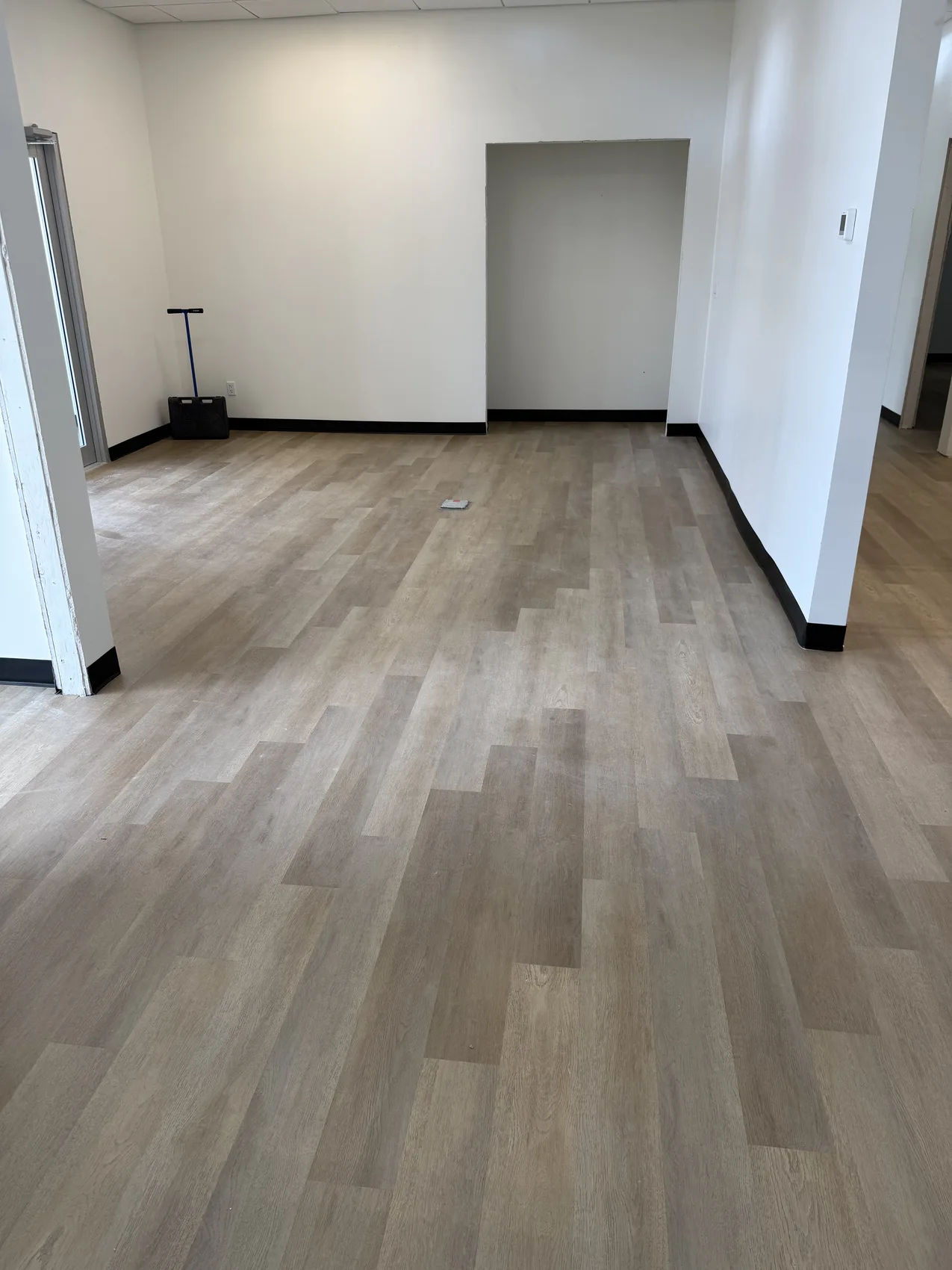
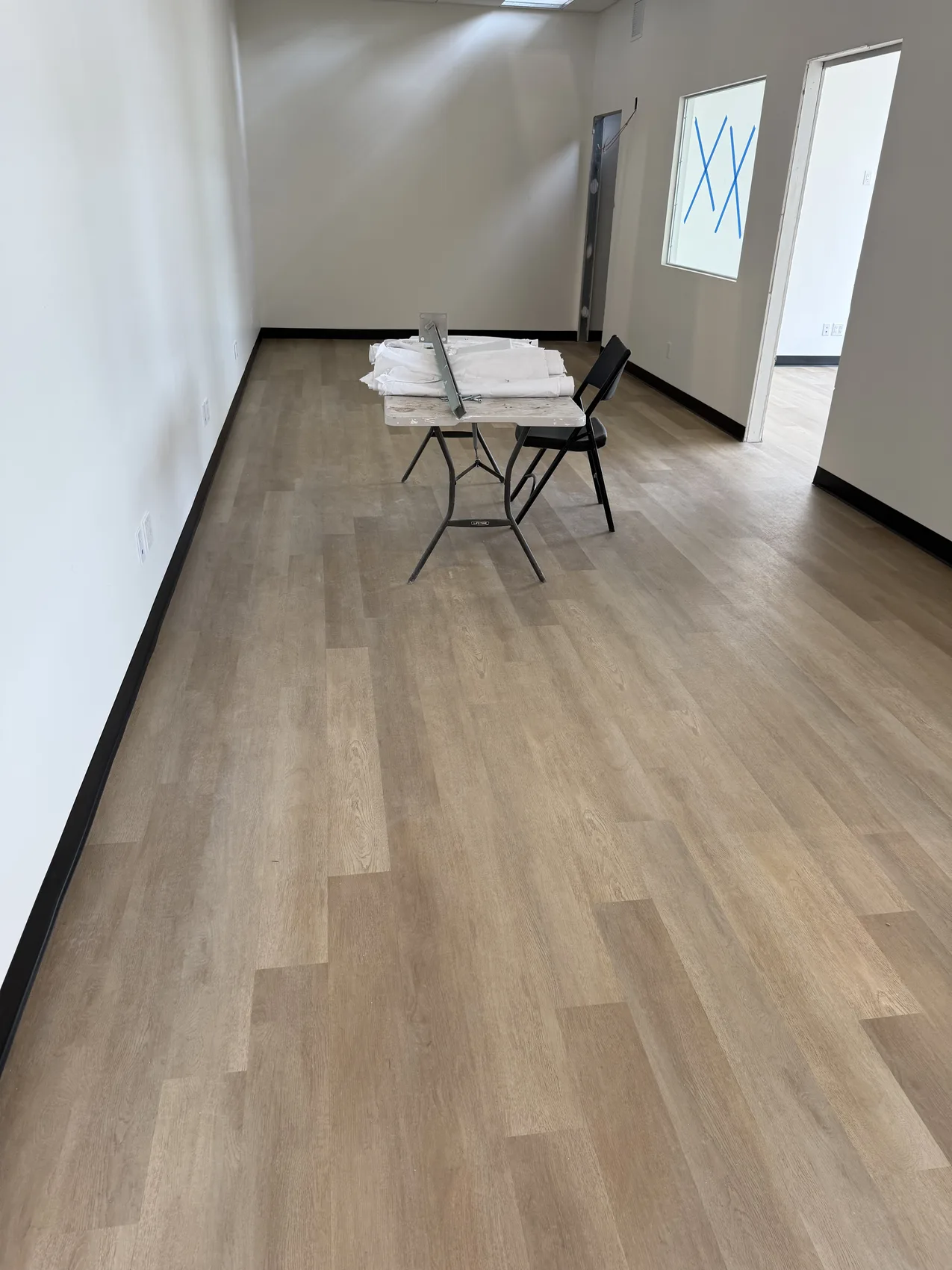
For most Long Island basements, waterproof luxury vinyl plank (LVP) or luxury vinyl tile is the flooring we recommend most often, and for good reason. A quality rigid-core product (SPC, stone-plastic composite) is 100 percent waterproof through its thickness, so a spill, a humid week, or a minor seepage event will not swell or delaminate it the way laminate or engineered wood would. It clicks together as a floating floor, which lets it move slightly with seasonal temperature changes without lifting.
It also solves the comfort problem. Modern LVP comes in convincing wood and stone looks with a bit of give underfoot, and it stays warmer than bare tile in an unheated basement. Typical installed costs run in a wide range depending on the product tier and prep work, generally in the low-to-mid single digits per square foot for material with labor on top, but every basement is different, so the honest answer is to get a free estimate at (631) 875-9031.
One caution: waterproof does not mean flood-proof. LVP handles humidity and small spills beautifully, but standing water from a failed sump pump can still get trapped underneath. Pair it with a proper moisture-managed subfloor and address any active water source first.
Ceramic and porcelain tile: the bulletproof option
When a basement or a damp room like a laundry area, a below-grade bathroom, or a mudroom will see real water, ceramic and especially porcelain tile is the most durable choice you can make. Porcelain absorbs almost no moisture, does not care about humidity, and can be laid directly over a properly prepared concrete slab. If your sump pump ever fails, you mop it up and the floor is unbothered.
The trade-offs are comfort and cost. Tile is cold and hard underfoot, which matters more in a finished living space than in a utility room, though an area rug or under-tile heating can offset that. Installation is more labor-intensive because the slab has to be flat and the grout has to be sealed to stay clean, so tile usually sits at the higher end of basement flooring budgets. Done right by an experienced crew, it can outlast the rest of the house.
What to avoid below grade
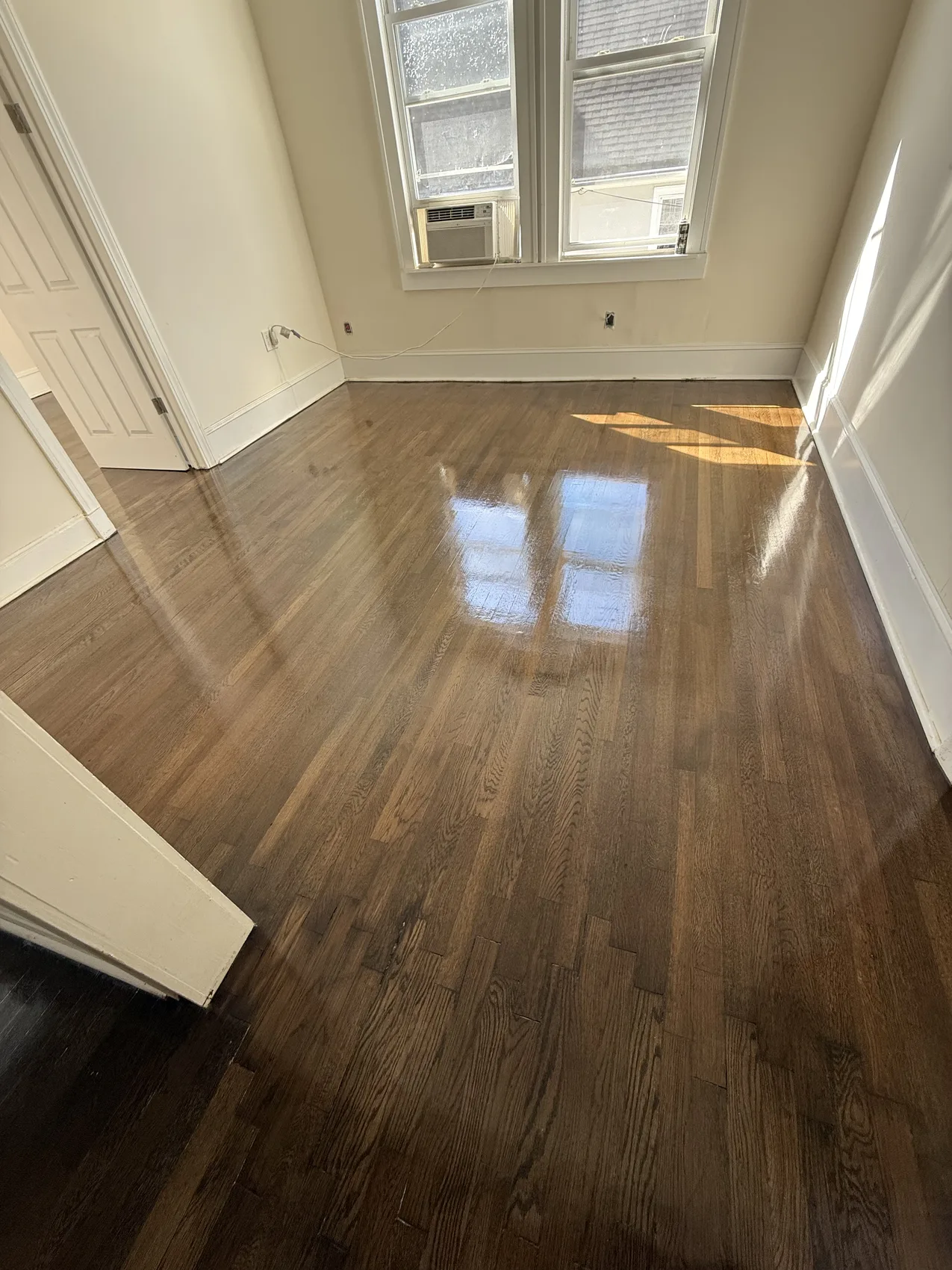
Some flooring simply does not belong in a Long Island basement, no matter how good the deal looks. Solid hardwood is the clearest example: wood is hygroscopic, meaning it drinks up ambient moisture, and below-grade humidity will cup, gap, and warp it. Traditional laminate is another common mistake, because its fiberboard core swells permanently the moment water reaches the seams, and there is no repairing it after that.
Wall-to-wall carpet directly on a slab is risky too. It feels cozy, but it holds humidity against cool concrete and becomes a reservoir for mold and that musty basement smell that so many Long Island homes fight. If you love the softness of carpet below grade, use carpet tiles with a moisture-resistant backing over a proper subfloor so any affected section can be lifted and replaced.
The pattern here is simple: anything that absorbs water or traps it against the slab is a liability underground. The goal is a floor that either repels moisture or lets the slab breathe underneath it.
Prep and moisture control make or break the job
Here is the part homeowners underestimate: the flooring material matters less than what happens underneath it. Before a single plank or tile goes down, the slab should be checked for moisture, cracks should be addressed, and the space should be dry and stable. Installing beautiful waterproof vinyl over a slab that is actively pushing moisture is a fast track to a floor that fails and a warranty that will not cover it.
In many Long Island basements the right answer is a moisture barrier or a raised subfloor system with a dimpled underlayment that creates a small air gap, letting any vapor move to a drain or sump instead of into your finished floor. If your basement has ever taken on water, that history needs to be part of the plan, not a surprise discovered after installation. A good contractor tests and preps first, then installs.
This is exactly where 20 years of local experience pays off. We have worked on the older homes across Suffolk and Nassau, we know how these basements behave through a humid summer and a hard winter, and we build the floor for the conditions rather than hoping for the best. One crew, clean work, and an honest assessment before anything gets glued or clicked into place.
Frequently asked questions
Waterproof vinyl will not swell or delaminate from humidity or small spills, which makes it a strong basement choice. But if you have had actual flooding, the water source and the subfloor need to be handled first, since standing water can still get trapped underneath any floating floor. We assess that history before recommending a product.
Rigid-core waterproof vinyl usually gives the best balance of durability and price for a below-grade space, and it is warmer and softer than tile. Actual cost depends on the product tier and how much moisture prep your slab needs. Call (631) 875-9031 for a free estimate on your specific basement.
You can, but the concrete almost always needs moisture testing, crack repair, and leveling first, and skipping that step is the number one reason basement floors fail early. A slab that looks dry can still push vapor. A professional prep and install protects both the floor and its warranty, especially in older Suffolk and Nassau homes.
Non-absorbent surfaces like porcelain tile and rigid waterproof vinyl are best, because they do not hold moisture or feed mold the way carpet and laminate do. Pairing them with a proper vapor barrier or raised subfloor lets the slab manage moisture instead of trapping it, which is what usually causes that musty basement odor.